Most people think a toilet is either clean or dirty. It isn’t. It’s on a cycle — and the cycle moves faster than anyone’s cleaning schedule. Here is what the research actually shows, and why the fix was never about scrubbing harder.
In a hurry? Skip to the tablet that cleans on every flush (Buy 1 Get 1 FREE) →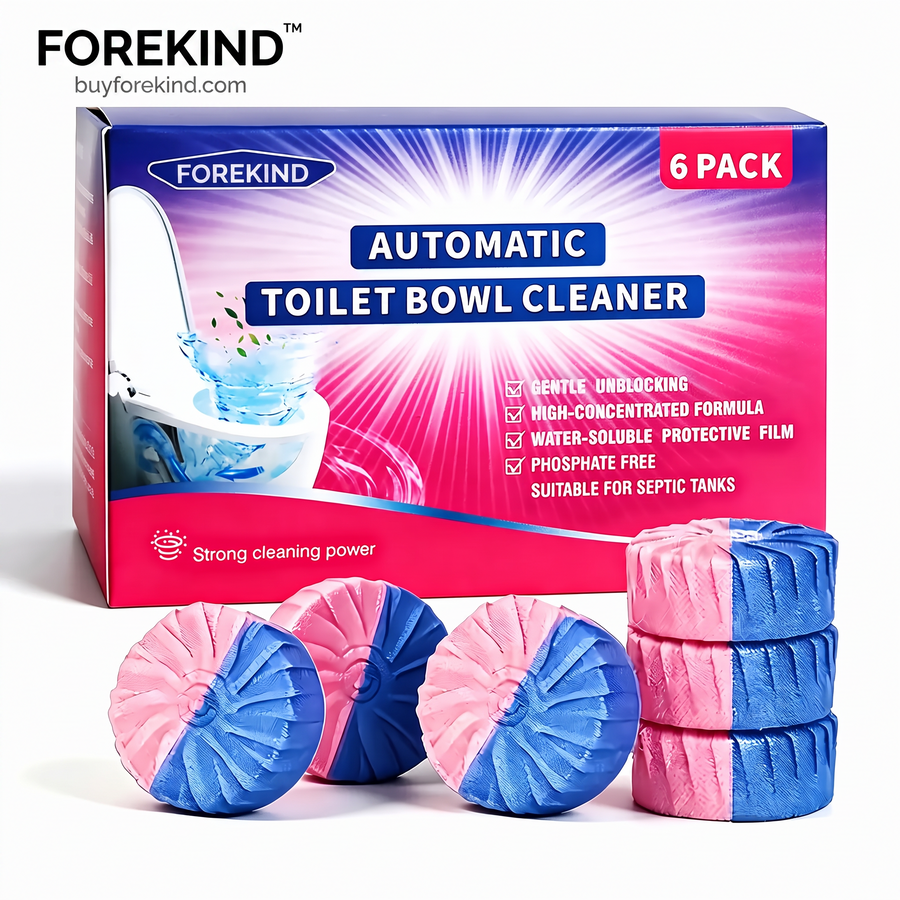
Let’s get one thing out of the way: this is not about people who don’t clean.
It’s about the ones who do. Who scrub properly, use a decent cleaner, and still watch the ring creep back at the waterline. Still catch the smell returning a day later. Still feel like they’re losing a fight they’re actually working hard at.
They are. And it was never about effort. Here are 7 reasons why — and the one thing that changes the outcome.
Every flush fires something into the air you can’t see
Researchers pointed lasers at a flushing toilet and filmed it for the first time. What they recorded wasn’t a fine mist near the rim. It was a plume.
Droplets left the bowl at more than 6.6 feet per second and reached 5 feet above it within 8 seconds — roughly breathing height for anyone standing there. The particles are invisible to the naked eye.
The largest droplets settle within seconds. The smallest — under 5 microns — stay suspended in the air for minutes, then land on every surface in the room. The counter. The towel. The handle. Whatever else is stored in there.
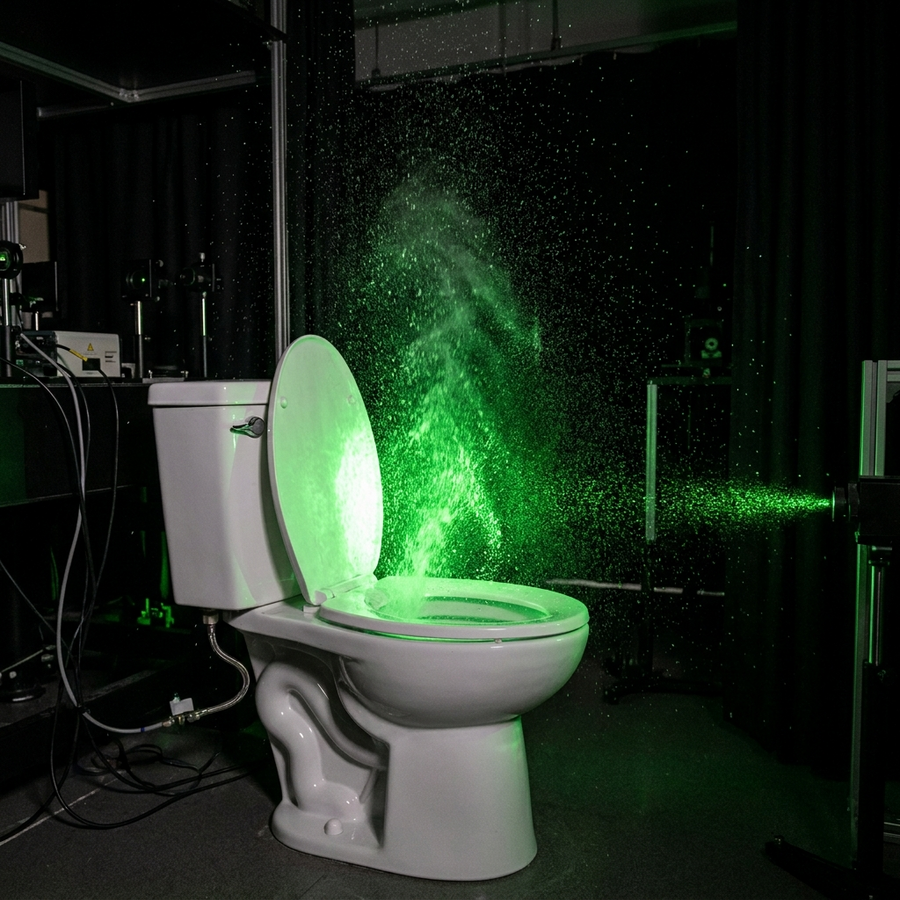
Lit by a laser sheet, the plume becomes visible. In a normal bathroom, none of this can be seen.
It happens on every flush — not when the bowl looks dirty
This is the part that quietly breaks every cleaning routine ever written.
The plume isn’t produced occasionally. It isn’t produced once things have “got bad.” It happens every single time the handle goes down — by every person in the house, several times a day, whether the bowl was cleaned this morning or three weeks ago.
So put the two schedules side by side:
| How often it happens | |
|---|---|
| The contamination event | Several times a day, every day |
| The average deep clean | Once a week |
| An honest average | Once every 10–14 days |
Nobody loses this because they scrub badly. They lose it because they scrub rarely — and no human being is cleaning a toilet six times a day.
One tablet lasts about 300 flushes
What’s riding on it doesn’t die easily
If everything cleared out on its own, the frequency wouldn’t matter much. It doesn’t clear out.
Researchers detected a diarrhoea-causing superbug in the air 10 inches above the bowl after a lid-up flush. Its spores survive on dry surfaces for up to 5 months — and shrug off alcohol, antibacterial sprays and weak bleach.
Norovirus can infect a person with as few as 18 viral particles. It stays infectious on hard surfaces for weeks, and remained infectious on a toilet flush handle for at least a month.
And the cleaner most people reach for is fighting on a clock it can’t win. Chlorine needs at least 10 minutes of contact time to kill spores. A flush lasts seconds.
None of this is exotic. It’s the ordinary microbiology of an ordinary bathroom.
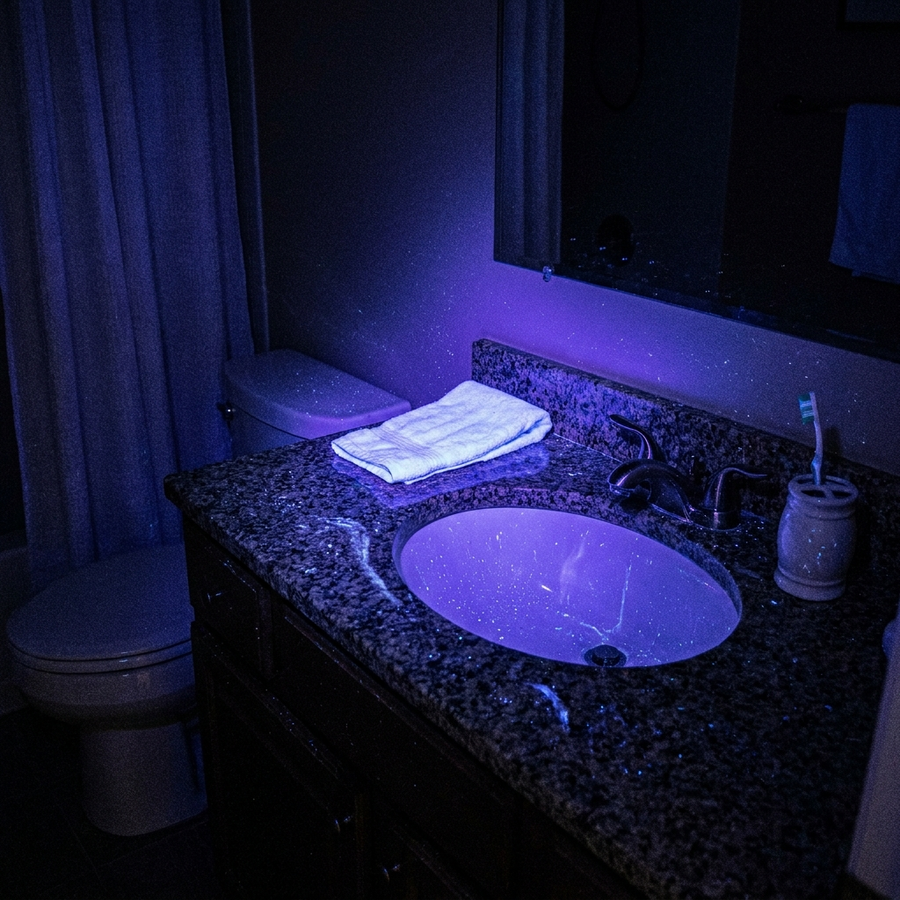
The same bathroom under UV. Every one of those specks landed there from the air.
The bowl never actually empties
Here’s the assumption almost everyone makes: flush it, and it’s gone.
It isn’t. Organisms stay stuck to the porcelain after flushing. They come off gradually — released back into the water and the air on later flushes, hours after whatever caused them has been forgotten.
Airborne bacteria measured 1,300 per cubic metre after one flush — and were still being released several flushes later.
Which means the water sitting in the bowl right now isn’t fresh water. It’s the same water that was contaminated the last time the toilet was used, diluted and stirred.
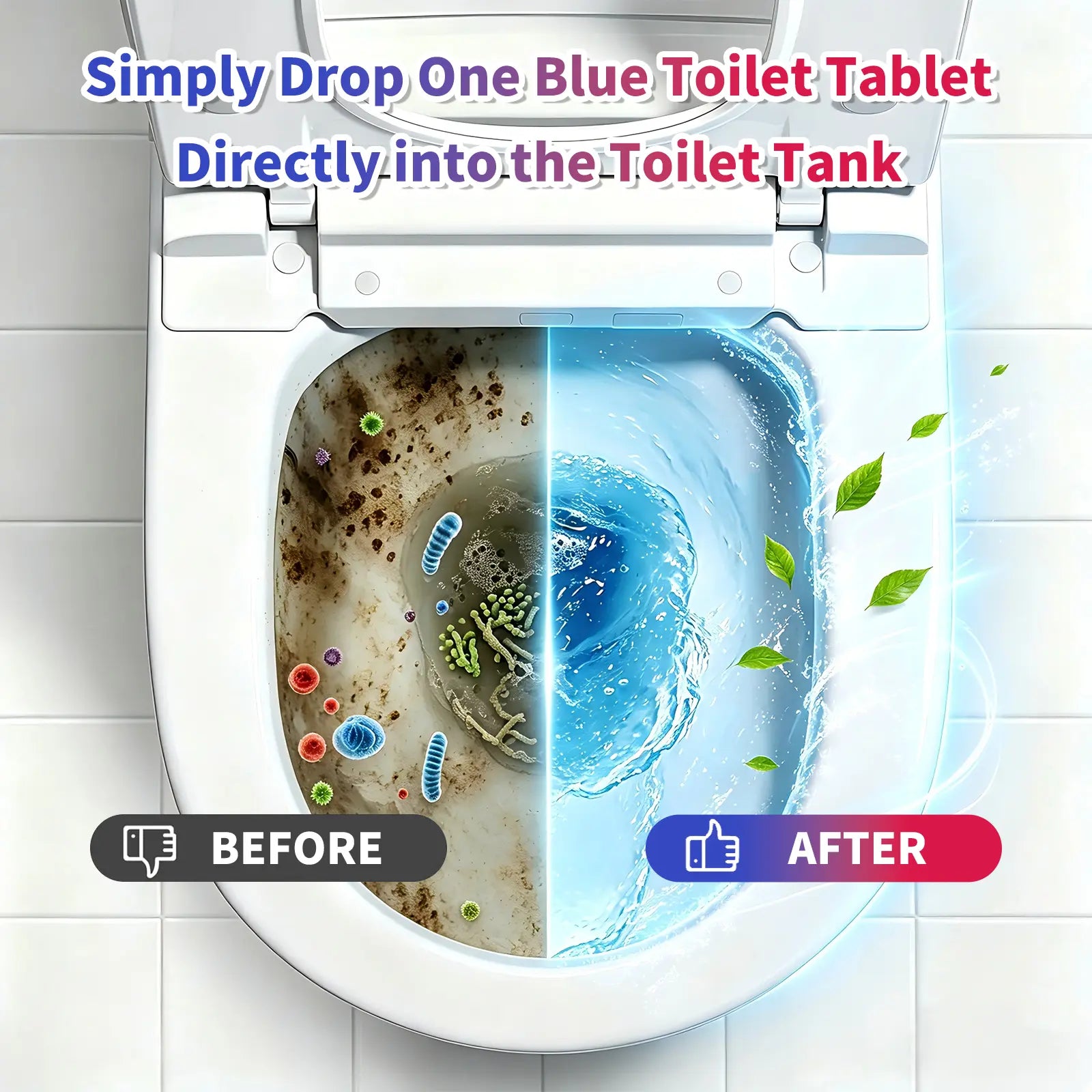
Left: buildup accumulating between cleanings. Right: a bowl being treated on every flush.
The numbers that change how you clean
Three findings. No fine print.
There’s a colony under the rim your brush has never touched
Run a brush around a bowl and you clean the part you can see. The part that matters most is the part you can’t.
Salmonella has been found surviving in the biofilm under the rim and in the scaly layer just below the waterline — the two places a brush never actually reaches. A survey of domestic toilets found bacterial biofilm in every single one sampled.
Biofilm isn’t loose dirt. It’s a structure that exists specifically to protect what’s underneath it, which is why a quick wipe leaves the colony intact. Limescale makes it worse: the rough mineral surface gives bacteria something to anchor to and traps water in its crevices.
Then, after every flush, that biofilm re-seeds the water. The bowl re-contaminates itself — from the inside, on a schedule nobody set.
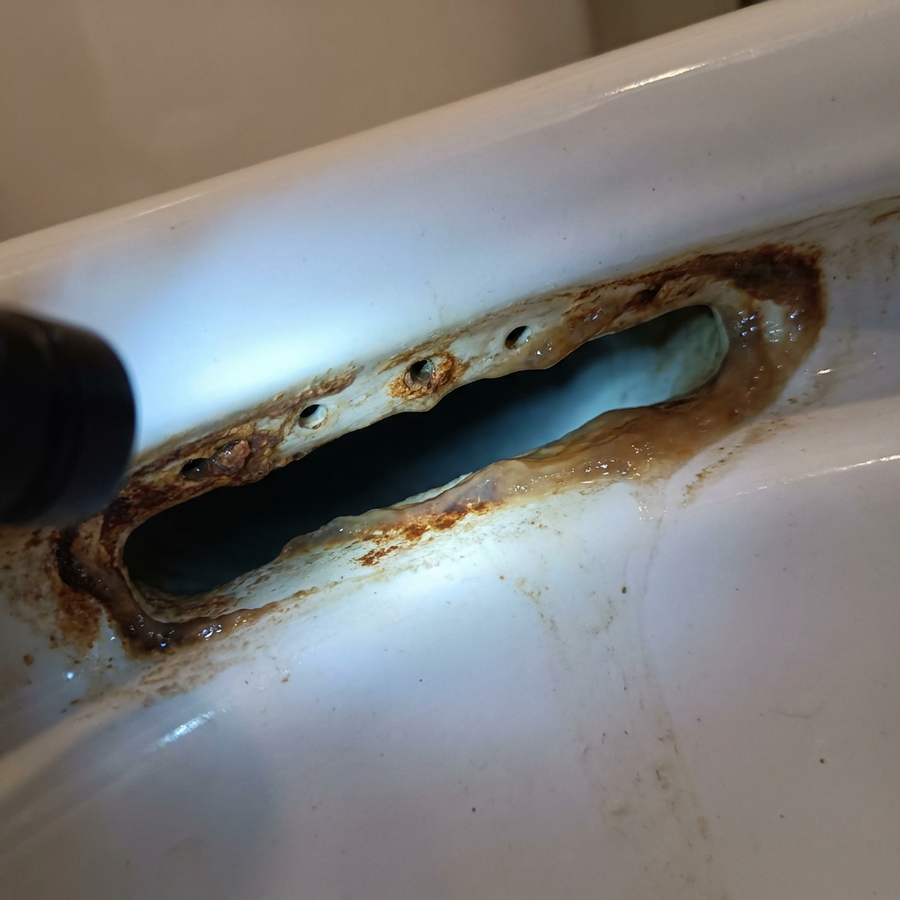
The rim channel — the part a brush passes under, never into.
BUY 1 GET 1 FREE NOW →The brush itself is part of the problem
This is the one nobody enjoys hearing, because the brush is the tool people trust most.
Toilet brushes have been found to act as reservoirs for drug-resistant bacteria — and brushes kept in closed, damp holders harboured 6.8 times more live bacteria. Scrubbing a bowl without disinfectant was found to spread contamination onto the surfaces around it.
Think about what that routine actually is. A wet brush goes into the bowl. It comes out loaded. It drips across the floor. It goes back into a sealed plastic holder that stays damp until next time — when it goes straight back into the bowl it was supposed to be cleaning.
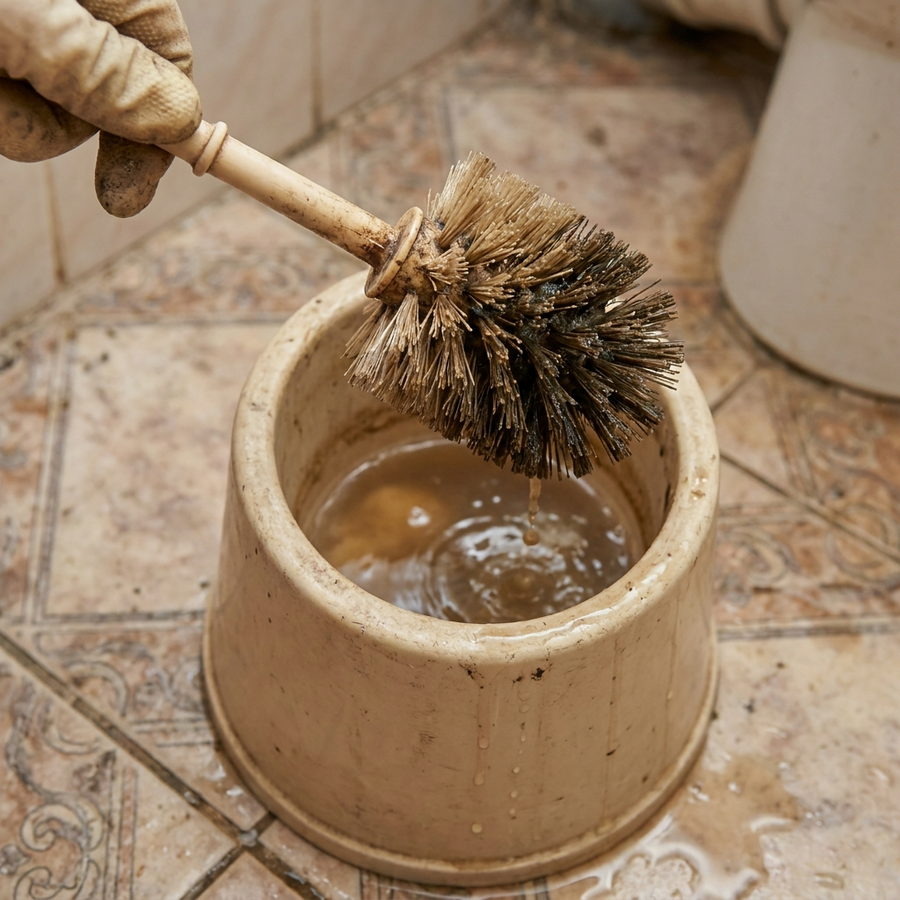
The holder stays wet between uses. That is the environment the next clean starts from.
What People Notice First
★★★★★“This thing is honestly incredible. The bowl stayed clean, the waterline ring disappeared, and that gross toilet smell was gone. I expected another useless tablet, but this actually works. I’m never going back to scrubbing every few days.”
— Sarah M. ✓ Verified Buyer
★★★★★“Best toilet cleaner I’ve ever bought—no exaggeration. I dropped one in the tank and within days the entire bowl looked cleaner, smelled fresher, and stayed that way. It feels like the toilet is cleaning itself every time I flush.”
— Daniel R. ✓ Verified Buyer
Individual results vary.
Cleaning is a moment. Contamination is a schedule.
Put the six reasons above into one line and this is what’s left: the problem runs continuously, and the solution has been running weekly.
Bacteria return to over 80% of pre-cleaning levels within 24 hours. The highest counts come back within three days. In warm, wet conditions bacteria can double every 20 minutes — and a toilet bowl supplies warmth, moisture and nutrients permanently.
So the honest version of a weekly clean is this: a few hours of genuinely clean, then six days of watching it come back.
You can’t out-scrub that. You can only change the frequency — and that’s the whole idea behind FOREKIND.
One dual-colour tablet drops into the cistern — no film to peel, nothing to fit, nothing to touch. From the next flush onward, every flush carries cleaning and deodorising action through the rim channel and around the bowl. The places a brush was never going to reach get treated several times a day, automatically, for about 300 flushes.
Targets limescale, lifts staining and neutralises odour at the source — the buildup that gives biofilm something to anchor to.
Keeps the bathroom smelling clean between uses, so freshness isn’t something you top up with a spray.
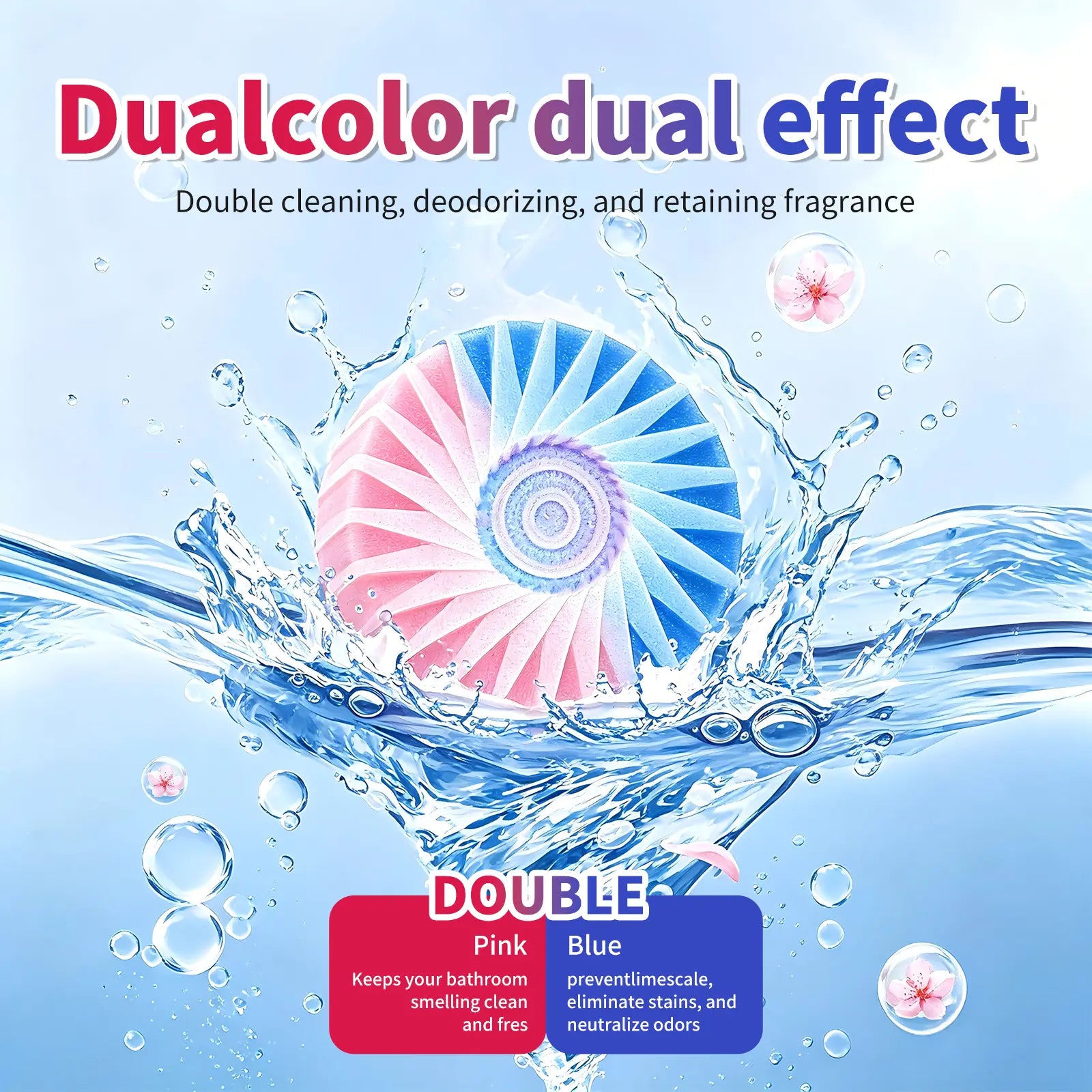
Two actions in one tablet — that’s the 2-in-1.
Not a deeper clean. A clean that doesn’t stop between cleanings.
| FOREKIND | Brush & bowl cleaner |
Basic blue block |
|
|---|---|---|---|
| Works on every flush | ✓ | ✗ Weekly | ✓ |
| Cleaning and deodorising | ✓ Both | Cleaning only | ✗ Mostly dye |
| Targets limescale buildup | ✓ | varies | ✗ |
| Hands-free | ✓ | ✗ | ✓ |
| Lasts ~300 flushes | ✓ | — | varies |
| Needs a brush in the bathroom | No | Yes | varies |
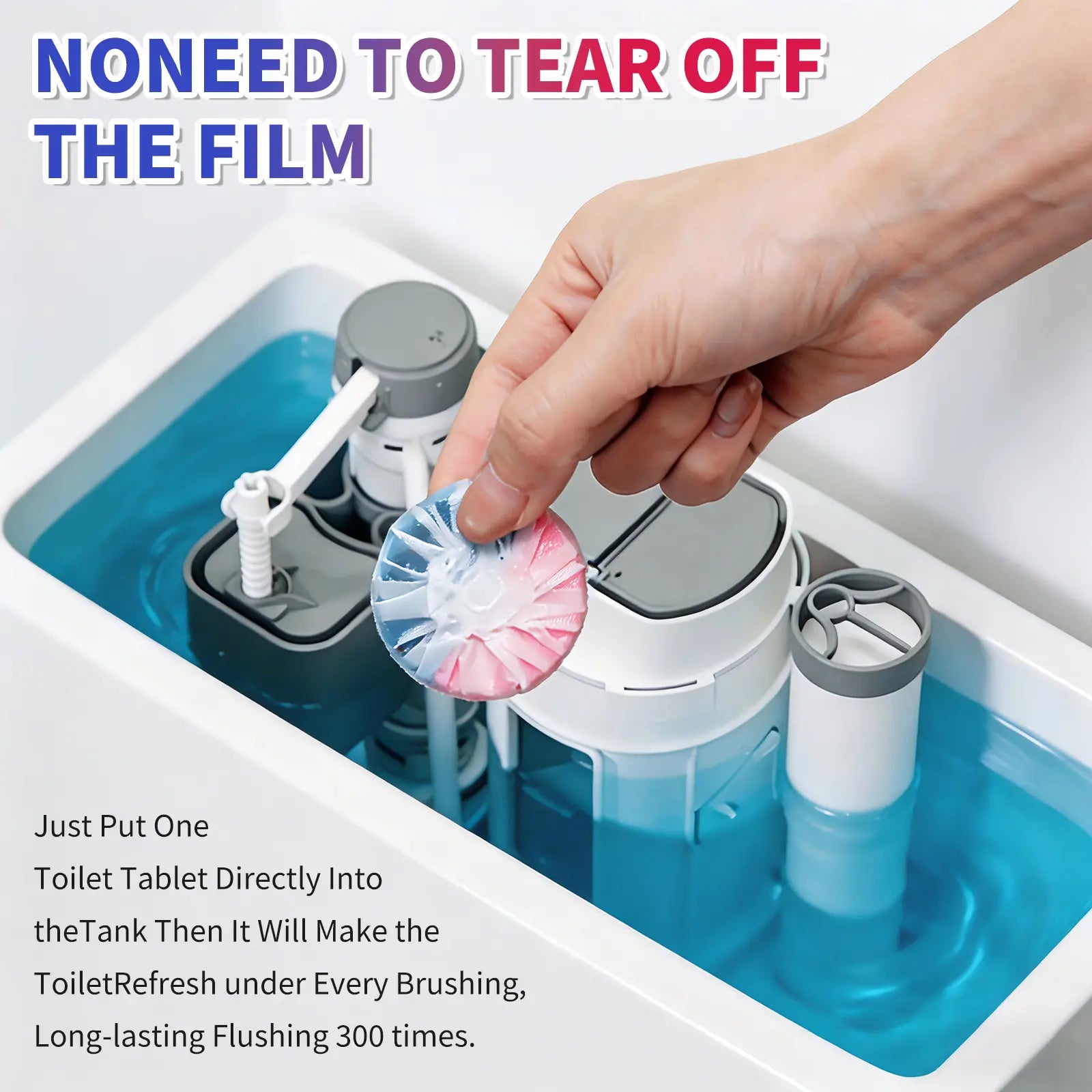
Drop it in the cistern. No film to peel, nothing to fit. That’s the whole installation.
Takes about ten seconds. From the next flush on, every flush is doing cleaning work.
Odour between cleans is the change most people report first.
Nothing gets the uninterrupted days it needs to build up — so the ring stops coming back the way it used to.
Individual results and timing vary.
Stop Cleaning a Toilet That Doesn’t Stay Clean
FOREKIND Automatic 2-in-1 Toilet Bowl Cleaner — 6 tablets, about 300 flushes each
★★★★★ 4.8 / 5 · 100,000+ customers
12 tablets — roughly 1,800 flushes of continuous cleaning
- Cleans and deodorises on every flush — not once a week
- Carried under the rim and around the bowl by the flush itself
- Blue half targets limescale, staining and odour
- Pink half keeps the bathroom fresh between uses
- Drops straight into the cistern — no film to peel
- Septic-safe and phosphate-free
- One tablet lasts about 300 flushes
- One per toilet — most homes have more than one
🔒 Secure checkout · Easy returns
Questions? Answered.
How is this different from a basic blue block?
A basic block is mostly dye — it colours the water and perfumes the room. This one is dual-action: the blue half works on limescale, staining and odour at the source, and the pink half handles freshness. Two jobs, one tablet, on every flush. That’s the 2-in-1.
Where does it go — the bowl or the tank?
The cistern (the tank behind the bowl). Lift the lid, drop it in, put the lid back. There’s no film to peel off first and nothing to clip or fit. From the next flush onward it’s working.
How long does one tablet last?
About 300 flushes. For most households that’s several weeks per tablet — and the pack contains six.
Do I still need to scrub?
Far less often — that’s the point. This is about stopping buildup from establishing between cleans rather than removing damage that’s already set. An occasional wipe is still sensible; the weekly scrub stops being mandatory.
Is it safe for my plumbing and septic system?
Yes — it’s formulated to be septic-safe and phosphate-free, and it’s designed for standard cisterns.
Will it stain the cistern or the bowl?
[VERIFY — answer this with the supplier’s guidance. It’s a common objection for coloured tablets and a straight answer converts better than silence.]
Is it safe with children and pets in the house?
[VERIFY — answer with the real formulation facts and any required cautionary label wording. Do not improvise this one.]
Will it work in a hard-water area?
Hard water is exactly where limescale and the returning ring are worst, and limescale is what the blue half is aimed at.
How many do I need?
One tablet per toilet at a time. Most homes have more than one toilet — and the second bathroom is usually the one that gets cleaned least.
My toilet already looks clean. Do I need this?
Visible cleanliness and microbial cleanliness are two different measurements. A bowl with no visible stain can still be fully colonised, and the biofilm that eventually becomes the ring is building long before the ring appears. This is about keeping it that way without the weekly job.
What if it doesn’t work for me?
[GUARANTEE — state the real returns window, what has to be returned and who pays return shipping. Name the guarantee rather than leaving it generic.]
The Bowl Doesn’t Stay Clean. Now It Doesn’t Have To.
You already know what the fourth day after cleaning looks like. Drop one tablet in the cistern and let every flush do the job instead — including the part of the bowl a brush has never reached.
Get the every-flush clean →This page is an advertisement for FOREKIND. Results and experiences vary.
Research findings cited on this page describe toilets and bathrooms in general. They are not claims about the performance of this product.